
Store
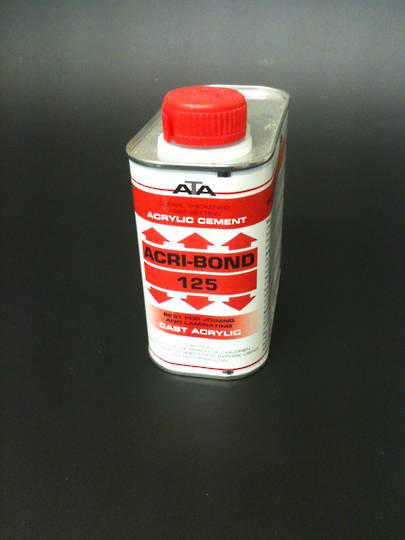
(ATA-125-0.5L) 125 Acribond 0.5L Tin Solvent Adhesive
$ 45.58
125 Acribond 0.5L Tin Acrylic Lamination (Class 6) Contains U.N. 1593 METHYLENE CHLORIDE CAS No. 75-09-2U.N. 1710 TRICHLOROETHYLENE CAS No. 79-01-6and ACRYLIC RESINPG IIIHAZCHEM CODE 2ZClass 6.1 Instructions Parts to be joined should fit without forcing and be clean. Apply adhesive with suitable applicator and assemble while parts are still wet. Press parts together in firm contact. ACRI-BOND 125 forms initial bond very quickly. Strength develops rapidly reaching full strength in 24 to 48 hours leaving about 20%of dry residue. Recommended use This adhesive has been design for bonding and laminating Acrylic to Acrylic. Also, shows good results bonding Acrylic to Polycarbonate, HIPS, ABS, PVC, PETG. Test before use for other plastic materials. Warranty This product is intended for use by skilled individuals at their own risk. Since specific use, materials and handling are not controlled by ATA, our warranty is limited to the replacement of defective products only. Risk – R 40(3), 45(2), 36/38, 52, 53 Chemicals used in this cement shown to cause cancer in laboratory animals. Risk to your health depends on level and duration of exposure. Irritating to eyes and skin. Repeated exposure may cause skin dryness and cracking. Vapour may cause drowsiness and dizziness. Safety – 23, 24/25, 36/37, 61 Do not breathe vapour. Wear suitable protective clothing and gloves. Avoid release in environment. Keep container in a well ventilated place. Keep away from sources of ignition. Avoid contact with eyes. First Aid If swallowed, do NOT induce vomiting. If in eyes, hold eyes open, food with water for at least 15 minutes and see a doctor. If skin contact occurs, soak contaminated clothing with water and then remove. Wash skin with soap and water. If inhaled, remove from contaminated area. For advice contact a Poisons Information Centre in Australia 131 126 or a doctor. Spills/leaks Don protective equipment including respirator. Contain spilled material to prevent it entering drains. Absorb on sand, earth or other inert absorbent and place in properly labelled sealed containers for disposal. Fire The product will decompose in a fire giving all toxic fumes. In case of fire use water fog, foam, dry chemical or carbon dioxide. Cool tank/container with water spray. ADDITIONAL INFORMATION IS LISTED IN THE MATERIAL SAFETY DATA SHEET
Related products
-
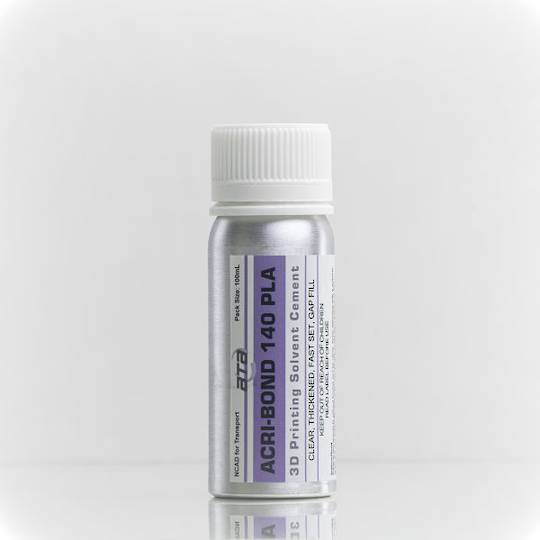 (ATA-140PLA-100ml) Acri-Bond 140 100ml Thicknened PLA cement(ATA-140PLA-100ml) Acri-Bond 140 100ml Thicknened PLA cement
-
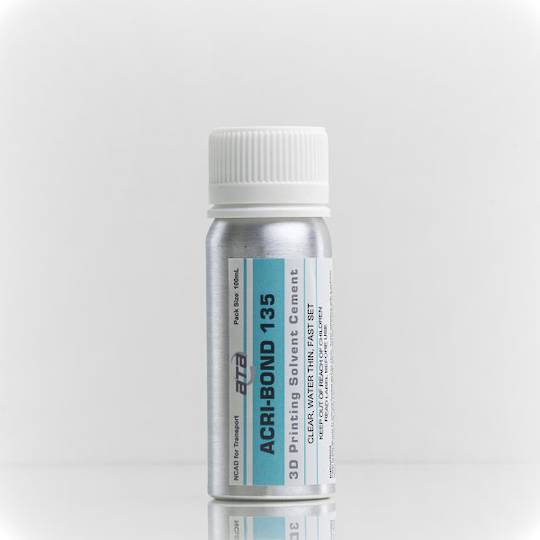 (ATA-135-100ML) 135 Acribond 100mL Bottle 3D printing Adhesive(ATA-135-100ML) 135 Acribond 100mL Bottle 3D printing Adhesive
-
 (ATA-120-100ML) 120 Acribond 100mL Bottle Solvent AdhesiveADD TO CART